Why the Silent Growth Killer in Your Business Is Hiding Inside Your Past Success
TL;DR: Human beings naturally confuse what is familiar with what is effective. Whether you are transitioning from founder hustle to a scale up, watching agile disrupters rewrite your category norms, or hiding behind great customer service as your sole differentiator, doubling down on legacy playbooks eventually yields diminishing returns. Real strategic growth isn’t about running yesterday’s playbook 10% faster, it’s about challenging legacy assumptions, changing the geometry of your market, and evolving before your competitors force your hand.
The Efficiency Trap: Why Success Is a Terrible Teacher
When a business hits its stride, standard management logic dictates that we should double down, standardise, and optimise. We build spreadsheet models to squeeze a bit more efficiency out of the exact playbook that got us to where we are today. It feels rational. It feels safe.
However, in executive leadership, doing the conventional thing often leads to competitive stagnation. If you follow the exact same best practices as everyone else in your sector, you inevitably end up looking, sounding, and performing identically to your competitors.
What worked brilliantly during your initial expansion phase, founder led charisma, brute force grafting, and pure gut instinct, eventually hits a wall of diminishing returns.
As executive coach Marshall Goldsmith famously observed: “What got you here won’t get you there.”
The uncomfortable reality is that most successful businesses do not stall because their leadership starts making bad choices. They stall because leadership keeps making yesterday’s right choices long after the market context has changed. If driving growth feels like you’re pushing a heavy boulder up an increasingly steep hill each quarter, pushing harder is rarely the solution. You need to change the strategic geometry of the hill.
Here are three critical inflection points where repeating past success is no longer a viable strategy.
1. The Life Stage Shift: Moving From Founder Hustle to Scale Up Governance
In the launch phase, the founder effectively is the commercial engine. You grafted, you experimented, you leveraged your personal network, and you personally closed the key accounts. That founder led energy is irreplaceable in the early days, it is how early stage companies survive.
However, once you cross the threshold into a mature scale up, relying on founder energy creates an operational bottleneck.
You now have a larger organisation, higher overheads, and broader market ambitions. You simply cannot be in every client meeting or direct every strategic initiative. To hit your next milestone, executive leadership must transition from personality driven hustle to system driven governance.
Refining your leadership model at this stage isn’t about diluting your founding vision. It’s about codifying that vision into repeatable systems, sharp market positioning, and clear operational frameworks so your executive team can deliver predictable growth without needing you in the room 60 hours a week.
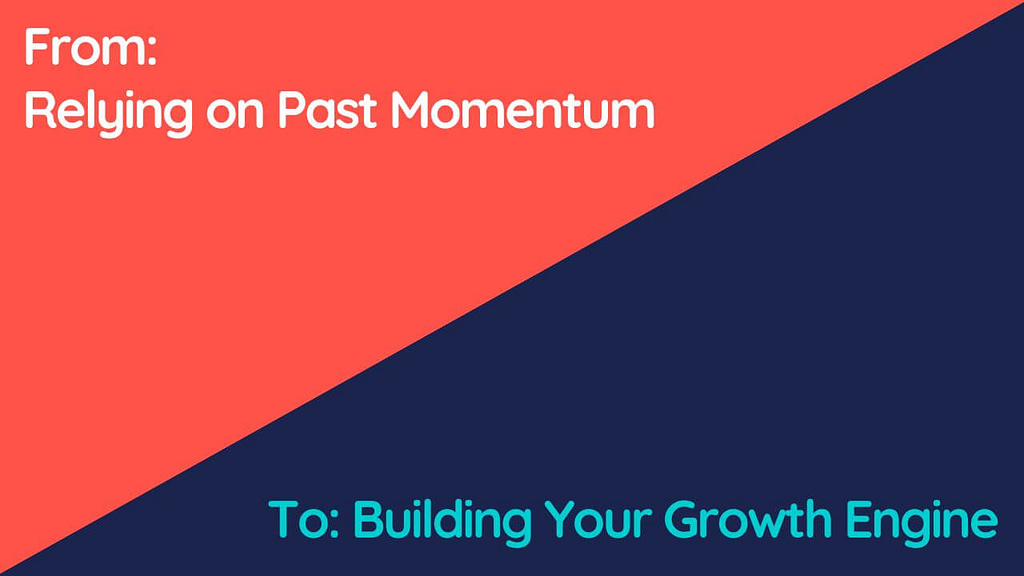
2. Strategic Foresight: Anticipating Market Shifts Before Disrupters Intervene
It is remarkably easy to confuse a buoyant market cycle with strategic brilliance. A rising tide lifts all boats, as the saying goes. But when market conditions shift, you quickly discover which organisations possess a resilient strategy and which were simply riding the macro wave.
Overnight, or quietly over a few years, competitive landscapes evolve. Category disrupters do not merely compete on price, they render traditional business models obsolete by completely resetting what buyers expect in terms of speed, transparency, and experience.
We see this pattern constantly across UK mid market players:
- Fintech vs High Street: Challenger platforms like Monzo and Starling did not beat legacy UK banks by offering slightly better interest rates. They won by restructuring the customer relationship around frictionless mobile experiences and real time clarity.
- Energy Infrastructure: Octopus Energy entered a notoriously stagnant sector dominated by established legacy operators, rapidly acquiring market share through smart tech infrastructure, plain English communication, and agile pricing.
When agile new entrants arrive in your space with sleeker customer journeys and fresher messaging, relying on we’ve been in business for 20 years ceases to be a mark of authority. To modern buyers, it sounds suspiciously like an admission that your business model has not evolved in a decade.
3. The Relevancy Trap: The Great Customer Service Myth
Customer needs, market desires, and buying habits move in one direction: forward. If your sales cycles are dragging or your addressable market feels like it’s shrinking, your core value proposition is likely losing its edge.
When faced with this slowdown, leadership teams frequently retreat to a familiar psychological security blanket.
If I had £1 for every business owner who told me, “Our key differentiator is our great customer service,” I’d be writing this from a private yacht in the Mediterranean.
Here is the candid truth: In today’s market, good customer service isn’t a differentiator, it’s table stakes. It’s the baseline cost of entry just to be considered. Every single one of your competitors claims to offer great service and high quality.
Unless your service delivery model is radically unconventional, clearly defined, and directly tied to an acute pain point your target audience is feeling right now, hiding behind great service simply masks a complete lack of strategic positioning.
Boardroom Diagnostic: Four Questions for Your Executive Team
Strategic clarity comes from stepping back, challenging legacy assumptions, and aligning your organisation with where the market is going next.
Sit down with your board or leadership team and run these four diagnostic tests:
- The Management Autonomy Test: If executive leadership stepped completely out of sales and operations for three months, would your growth engine predictably fill itself, or does revenue still depend on founder hustle?
- The Clean Slate Test: If you were founding your business from scratch today with your current capital and market knowledge, would you build the exact model you are using right now, or would you construct something much bolder?
- The Differentiator Test: If we stripped your logo, brand colours, and generic claims about great service from your communications, what is the single, concrete reason a buyer would choose your organisation over your competitors?
- The Asymmetry of Risk Test: Is the biggest threat to your business actually the operational risk of trying a new strategic direction, or is it the silent, compounding risk of remaining static while the market moves on?

The Status Quo Dilemma
You can spend the next 12 months attempting to run your old playbook 10% faster, spending more money to achieve diminishing returns, and hoping the market slows down to match your pace. Or you can take control of your strategic growth engine today.
Are you truly content optimising yesterday’s success, or are you ready to build the strategic engine required for your next stage of growth?
I hope this article prompts thoughts which lead to genuine action and make a meaningful difference for you and your business. Where you go from here is up to you:
- Take proactive action with your team: Sit down, run through the four diagnostic tests above, and challenge the internal assumptions holding your brand back.
- Speak with your current board advisor or agency: Bring this article to your next strategic review and tell them it’s time to up the game and sharpen your market positioning.
- Start a conversation with Alt P: Reach out directly. We offer focused pathways to support your next phase of scale:
- A One-Off Strategy Facilitation Session: A high impact session where we unpack your current strategy, unpick bottlenecks, and define your forward focus.
- Strategic Leadership Advisory: We partner with your executive team as an embedded strategic lead to guide your growth engine, commencing with a comprehensive strategy audit.
If you suspect your current strategy is carrying you on past momentum rather than driving future growth, let’s start a conversation. Let’s look at your organisation through a fresh lens before your competitors force your hand.